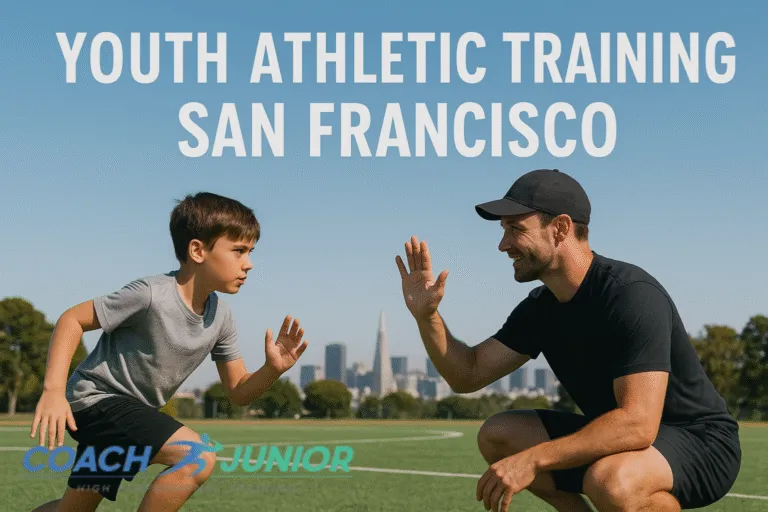
Youth Athletic Training San Francisco | Build Speed & Power
Welcome — you’re in the right place. If you care about your kid’s movement, confidence, and long-term athletic progress, this guide is designed for San Francisco families who want smart, evidence-informed, and fun youth athletic training. In this section I’ll quickly explain what we mean by youth athletic training in San Francisco (and why the “San Francisco” part changes how we design programs). Think of this as the map before the journey: what the program looks like, how it fits into city life, and what outcomes to expect.
Youth athletic training focuses on building the physical and motor foundations kids need to perform in sport and life — not just pushing weights or drilling the same sport skill. In San Francisco, that often means short travel times, sessions in parks or at home, and programs that respect school schedules, weather, and family routines. Ready? Let’s dig in.
Why Youth Athletic Training Matters
Why invest in structured youth athletic training? Because early, well-designed training does three things simultaneously: it improves how a child moves, lowers their injury risk, and grows life skills like confidence and grit. Think of training as planting a tree — the roots (movement patterns) set the stage for healthy growth, the trunk (strength & agility) supports everything, and the branches (sport skills) flourish later.
Physical Benefits: Strength, Speed, and Coordination
Kids who train properly get stronger, faster, and more coordinated — but not by lifting heavy loads. Strength for youth is about progressive bodyweight and light resistance training that stimulates muscular development and bone density safely. Speed improvements come from learning how to accelerate, decelerate and run with efficient mechanics. Coordination is the secret sauce: better balance, timing, and spatial awareness mean fewer clumsy falls, quicker reactions in games, and smoother movement across all activities.
Example outcomes:
Faster first-step speed on the soccer field.
Higher, safer vertical jumps for basketball.
Improved balance and fewer trips during playground games.
Mental & Social Benefits: Confidence, Focus, and Teamwork
Physical gains are visible; mental gains are sticky. Training builds routine, teaches goal-setting, and rewards effort. Kids learn to accept coaching, work through challenges, and celebrate small wins — all transferable to school and friendships. Group sessions teach teamwork and communication; one-on-one coaching grows self-esteem and trust. When a child masters a new skill, the confidence boost often shows up in class participation and social interactions too.

What Makes San Francisco Unique for Youth Training
San Francisco isn’t just another city — its neighborhoods, weather patterns, and access to green spaces shape how youth athletic training should be delivered.
Outdoor Parks, Micro-gyms, and Neighborhood Access
From Golden Gate Park to neighborhood fields in the Richmond, Sunset, Mission, or the Marina, San Francisco is packed with usable outdoor space. Many families prefer park sessions over lengthy gym commutes. Micro-gyms and community centers also offer small, adaptable indoor spaces for colder mornings. The best programs blend both: quick, high-quality park sessions and occasional indoor strength days when needed.
Climate, Commute, and School Schedules in San Francisco
That lovely SF fog means milder temperatures — great for year-round outdoor workouts — but morning fog and traffic can push families to prefer late-afternoon slots. Short sessions scheduled around school pick-ups or after-school routines work best. A high-quality youth athletic program in San Francisco anticipates these constraints and offers flexible windows: early evenings, weekends, and compact 30–45 minute sessions that deliver results without draining the family calendar.
Coach Junior’s Approach: Local, Personalized, Results-Driven
Here’s where local expertise matters. A San Francisco-based coach must understand neighborhoods, available spaces, and family rhythms — and Coach Junior does. The approach is simple: make training accessible, safe, and tailored so kids progress and parents can maintain consistency.
Who We Serve: Ages, Sports & Goals
We work with youth roughly aged 6–17 — from beginners getting their first taste of guided movement to competitive teens prepping for tryouts. Sports covered include (but aren’t limited to) soccer, baseball, basketball, track, lacrosse, and cross-country. Goals vary: general fitness, speed & agility for sport, recovery from injury, or building confidence and healthy habits.
Where We Train: Parks, Homes, and Community Spaces in San Francisco
No gym membership? No problem. Sessions happen where families are comfortable — neighborhood parks, school fields, backyards, or indoor community rooms. This minimizes travel, maximizes consistency, and keeps training aligned with daily life in San Francisco.
Coaching Philosophy: Fun + Fundamentals + Progression
We blend play with progress. Sessions must be fun to keep kids engaged. But they also prioritize fundamentals: proper movement patterns, balanced strength training, and age-appropriate progressions. Think of training like building a house: we lay a solid foundation (movement quality), erect sturdy walls (strength), and add the finishing trim (sport-specific skills).
Key Components of an Effective Youth Athletic Program
A great program covers multiple dimensions. Here’s what to expect in a quality youth athletic training San Francisco program.
Movement Quality & Fundamental Motor Skills
The very first priority is movement mastery. Can the athlete squat, hinge, lunge, and land safely? Are running mechanics efficient? These fundamentals prevent compensations and future injuries. Movement drills are scaled to age and ability, often embedded in games to keep things fun.
Balance, Coordination, and Body Awareness
These are subtle, high-value skills. Single-leg balance holds, coordination ladders, and reaction-time drills build proprioception and neuromuscular control. Better body awareness means smoother sport skills and fewer awkward falls or injuries.
Age-Appropriate Strength & Conditioning
Strength training for youth isn’t about big plates in the gym; it’s about progressive overload using bodyweight, bands, medicine balls, and, for older teens, light external loads. Programs emphasize quality reps, gradual progression, and rest. Reduced injury risk and improved athleticism are the expected returns.
Speed, Agility & Change-of-Direction Training
Real games are chaotic. Speed training focuses on acceleration mechanics, while agility work trains footwork and decision making. Drills are multi-directional and sport-relevant — not generic ladders for the sake of a drill. We teach how to decelerate safely and change direction with control, which is a massive source of competitive advantage.
Injury Prevention & Mobility Work
Every session includes mobility and warm-up routines targeting common youth issues: tight hips, poor ankle mobility, and weak glutes. We teach landing mechanics and introduce prehab movements to protect growth plates and joints. Prevention not only keeps kids playing — it keeps them happy and motivated to train.

Sample Training Plans — By Age Group
One size doesn’t fit all. Here are concise, realistic templates you can expect for each developmental stage.
Ages 6–9: Playful Fundamentals (Beginners)
Goal: build fundamental movement and love for activity.
Session length: 25–35 minutes.
Structure:
Dynamic warm-up (game-style)
Movement stations (jumping, throwing, balance)
Mini obstacle course or relay
Cool-down and praise
Why it works: attention spans are short — play embeds skill learning without boredom.
Ages 10–13: Build Strength & Skill (Intermediate)
Goal: introduce structured strength work, plyometrics, and coordination.
Session length: 40–55 minutes.
Structure:
Warm-up & activation
Strength block (bodyweight, bands, light DBs)
Speed/agility drills (short sprints, COD)
Sport-specific skill integration
Recovery & mobility
Why it works: kids at this age respond well to structured progressions and measurable goals.
Ages 14–17: Sport-Ready Performance (Advanced)
Goal: optimize power, sport conditioning, and tactical readiness.
Session length: 55–80 minutes.
Structure:
Movement screen & activation
Targeted strength (progressive loads, technique)
Power & sprint work
High-quality sport drills (situational training)
Regeneration: mobility, breathing, nutrition cues
Why it works: older teens can handle higher load and complexity when programmed responsibly.
Designing Sessions That Fit Busy San Francisco Families
Practicality is key. Here’s how sessions can be structured to fit busy lives without sacrificing progress.
30-Minute Park Sessions vs 60-Minute Home Sessions
Short, focused 30-minute park sessions are perfect for developing speed, agility, and movement quality. They’re easy to schedule after school and require minimal equipment. Sixty-minute home sessions are better for mixed strength and skill development — and when parents want a deeper, structured workout that pairs strength, mobility, and sport skills.
Which to choose? If you only have one weekly slot, choose the 60-minute. If you can do two 30-minute sessions, that beats a single long session for consistency.
Weekly Frequency & Season Planning
A generally effective model:
Off-season: 3–4 sessions/week focusing on strength, speed, and skill variety.
Pre-season: 2–3 sessions/week emphasizing sport-specific conditioning and tactics.
Competitive season: 1–2 maintenance sessions/week plus team practice; prioritize recovery and injury prevention.
Strategic periodization—planning intensity and volume across weeks—keeps kids fresh and improves results.

Measuring Progress: How We Track Results
Tracking keeps motivation high and shows real value to parents. We use simple, repeatable measures that are meaningful and easy to do.
Simple Tests Parents Can Do at Home
You don’t need fancy equipment. Try these:
10–20m sprint time (phone stopwatch)
Vertical jump (reach or mark method)
Single-leg balance time (eyes open)
Push-up or bodyweight squat counts in 30 seconds
Run these tests every 4–8 weeks to see trends, not one-off numbers.
Long-Term Milestones & Success Stories
Numbers matter, but milestones tell the bigger story: finishing a full match without fatigue, recovering from an ankle sprain and returning to play, or hitting a timed sprint PB at tryouts. These are the wins we celebrate and document.
What to Expect in the First Assessment
The initial assessment is a friendly, low-pressure start: a movement screen, short fitness tests, discussion of goals, and a sample mini-session. From that assessment, we lay out a clear plan with expected timelines and checkpoints. Parents leave knowing what success looks like and how we’ll measure it.
Conclusion
Youth athletic training done right is simple: prioritize movement quality, keep sessions fun, and progress deliberately. In San Francisco, flexibility and locality make a program successful — park options, short commutes, and family-friendly scheduling. Whether your child is 7 or 17, a local, personalized approach helps them build strength, speed, and confidence while staying safe and enjoying sport. If you’re looking for youth athletic training San Francisco families trust, choose a coach who values fundamentals, understands city life, and makes progress measurable and fun.
FAQs
What age is ideal to begin youth athletic training in San Francisco?
You can start structured, age-appropriate training around ages 6–8 with play-based fundamentals. For younger children, emphasize free play and basic motor skill games.
How many sessions per week does my child need to see progress?
Generally 2–4 sessions per week works well. Consistency is key: shorter, frequent sessions usually beat sporadic, long ones.
Do we need special equipment or a gym membership?
No — many effective programs use bodyweight, resistance bands, medicine balls, cones, and park benches. In-home and park training is ideal for San Francisco families.
How does training prevent injuries in young athletes?
By teaching proper movement mechanics, progressive strength work, mobility routines, and safe landing techniques. Early focus on balance and coordination reduces common youth injuries.
How will you work around my child’s school and sports schedule?
We design flexible plans: short after-school sessions, weekend slots, and seasonal periodization that prioritizes maintenance during competitive seasons and development in the off-season.