
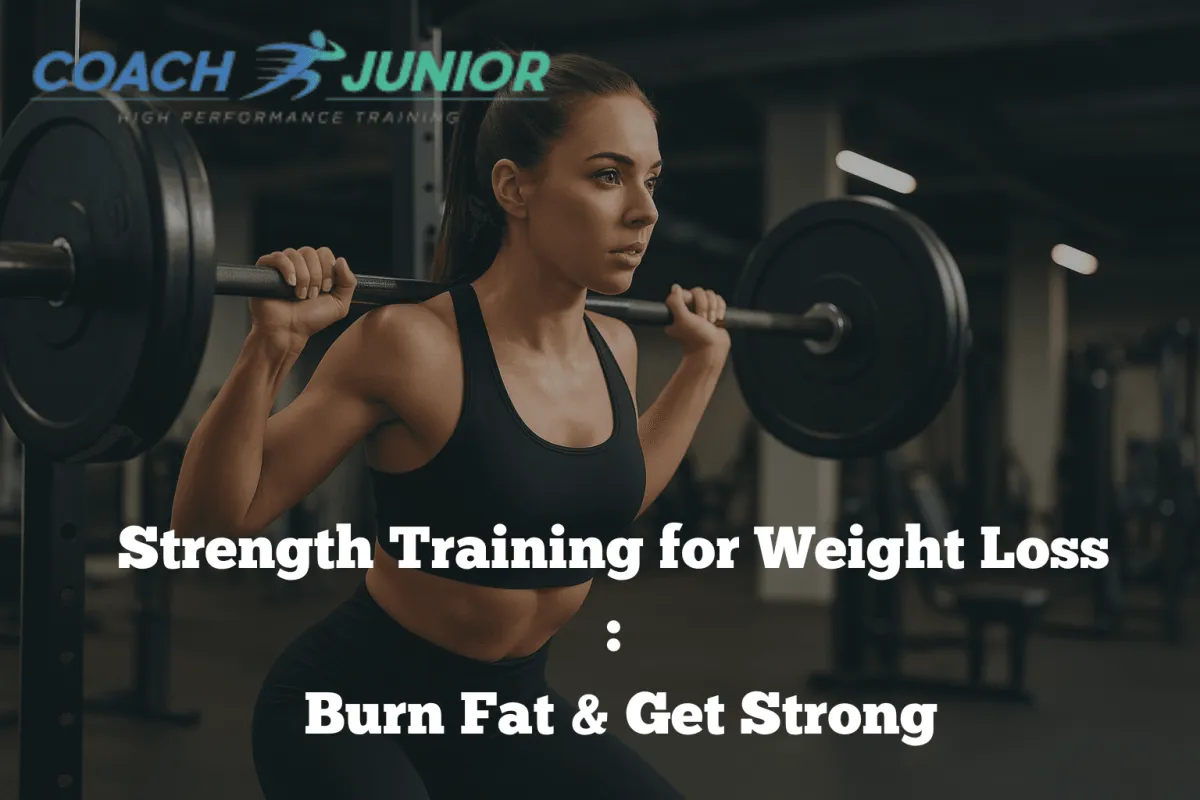
Strength Training for Weight Loss: Burn Fat & Get Strong
Lose fat, build muscle, and boost metabolism with the best strength training for weight loss. Simple workouts and tips to transform your body fast.
Introduction
Strength training is the best-kept secret for fat loss, and if you’re looking for the best strength training for weight loss, you’re in the right place. Unlike endless cardio that only burns calories in the moment, lifting weights revs up your metabolism, preserves lean muscle, and turns your body into a fat-burning machine around the clock. In this guide, we’ll break down proven training principles, effective workout plans for every level, nutrition strategies to fuel fat loss without sacrificing strength, and recovery methods that keep you progressing—all designed to help you build a leaner, stronger, and healthier physique that lasts.
Why Strength Training Beats Endless Cardio for Fat Loss?
Muscle is your metabolic engine
Every pound of lean muscle burns roughly 6–10 calories per day at rest. Doesn’t sound like much? Multiply that across 10–20 pounds of muscle, and you’ve got a body that naturally torches an extra 100–200 calories a day—without stepping on a treadmill.
Cardio is like lighting a match—bright, fast, but gone quickly. Muscle is like building a fireplace—it keeps burning long after the fire’s lit.
EPOC: the afterburn that keeps working
After a tough lifting session, your body enters Excess Post-Exercise Oxygen Consumption (EPOC)—basically, a recovery mode where your body keeps burning calories to repair muscle, restore glycogen, and balance hormones.
A long jog may burn calories during the run, but once you stop, so does the burn. Lifting weights is like putting your metabolism on autopilot for hours afterward.
Recomposition: lose fat, keep (and build) muscle
Here’s the problem with “weight loss” as a goal: you could lose weight but end up looking soft because you lost muscle along with fat. That’s where body recomposition comes in—losing fat while preserving or even building muscle. Strength training makes this possible, giving you that lean, toned, athletic look instead of just being a smaller version of the same shape.

Strength Trainings for Weight Loss—Core Principles
Progressive overload made simple
The golden rule: your body only adapts if you challenge it. That means lifting heavier, doing more reps, or adding more sets over time. You don’t need to max out every session—small progress adds up.
Example: If you squatted 100 lbs for 8 reps last week, aim for 9 reps this week, or 105 lbs for 8 reps. These small wins snowball into major transformations.
Lead with compound lifts, accessorize later
Compound lifts—like squats, deadlifts, presses, and rows—work multiple muscles at once. Not only are they more time-efficient, but they also burn more calories and create a stronger hormonal response (hello, fat-burning testosterone and growth hormone).
Accessories like curls, triceps pushdowns, and calf raises are fine, but they should be the “seasoning,” not the main dish.
Intensity, volume, and frequency (the golden triangle)
Think of training as a recipe—intensity, volume, and frequency are your main ingredients.
Intensity: The weight you lift (heavier = more intensity).
Volume: How much total work (sets × reps × weight).
Frequency: How often you train per week.
Play with these variables. For fat loss, you’ll want moderate intensity, moderate-to-high volume, and 3–5 training days per week.
Picking reps & loads specifically for fat loss
Heavy strength work: 3–6 reps with heavy weights (builds raw strength, helps preserve muscle).
Hypertrophy + fat loss sweet spot: 6–12 reps with moderate loads (muscle-building and calorie-burning combo).
Metabolic work: 12–20 reps or circuits (great for conditioning and calorie burn)
A well-rounded fat-loss program includes a mix of all three.
Deloads: how to rest without losing momentum
Training hard forever isn’t sustainable. Every 6–8 weeks, reduce your training load by 40–50% for a week. This prevents burnout, keeps your joints happy, and actually accelerates long-term fat loss because you recover better.
The Best Strength Trainings for Weight Loss (Workouts That Work)
Strength training isn’t just about lifting heavy weights—it’s about training smart. The best programs for fat loss strike a balance between preserving muscle, burning calories, and improving performance. Below are some tried-and-true templates that fit any lifestyle and experience level.
Full-body 3×/week template
Training your whole body three times a week is a classic, research-backed way to maximize calorie burn and muscle retention during fat loss. Each workout hits all major muscle groups, keeping your metabolism revved up every 48 hours.
Beginner version
Squat (goblet or bodyweight) — 3×10
Push-up or DB bench — 3×8–10
Romanian deadlift — 3×8
Dumbbell row — 3×10
Plank — 3×30s
Intermediate version
Back squat — 4×6
Bench press — 4×6
Deadlift — 3×5
Pull-ups — 3×AMRAP
Walking lunges — 2×12 each leg
Upper/Lower split 4×/week
This setup adds more training volume and is great for people who enjoy lifting more often.
Day 1 (Upper Push + Pull): Bench press, pull-ups, overhead press, barbell rows.
Day 2 (Lower): Squats, Romanian deadlifts, calf raises, planks.
Day 3 (Upper): Incline press, chin-ups, lateral raises, dumbbell curls.
Day 4 (Lower): Deadlifts, front squats, hip thrusts, weighted carries.
This approach maximizes both strength and hypertrophy, which is perfect for maintaining muscle in a calorie deficit.
Metabolic Resistance Training (MRT) finishers
MRT combines strength and cardio in short, high-intensity bursts. Adding these at the end of your workout ramps up calorie burn without stealing too much recovery.
Example MRT Finisher (10 min):
Kettlebell swings × 15
Push-ups × 12
Jump squats × 10
Rest 30 seconds, repeat 4–5 rounds
Think of this as a fat-burning “turbo boost” at the end of your workout.
Dumbbell-only & home-gym options
No barbell? No problem. Dumbbells can build plenty of muscle and burn fat effectively.
Sample Dumbbell Circuit:
Goblet squat — 3×12
Dumbbell deadlift — 3×10
One-arm dumbbell press — 3×10 each arm
Bent-over dumbbell row — 3×12
Split squat — 3×10 per leg
This is a complete fat-loss workout you can do in your living room.
20-minute minimalist plan for busy schedules
For days when you’re short on time, here’s a minimalist option that works:
Every Minute on the Minute (EMOM) 20 min workout:
Minute 1: 10 bodyweight squats
Minute 2: 10 push-ups
Minute 3: 8 dumbbell rows (per side)
Minute 4: Rest
Repeat for 5 total rounds (20 minutes). Quick, efficient, and calorie-crushing.

Technique 101: How to Lift Safely and Efficiently
Good form is the foundation of progress. Mastering the five movement patterns will keep you safe and maximize results.
Squat
The squat builds your legs, core, and stability.
Form tip: Keep your chest tall, core braced, and drive through your heels.
Common mistake: Letting knees cave inward.
Hinge (deadlift family)
Deadlifts and hip hinges target the glutes, hamstrings, and lower back.
Form tip: Push hips back, keep spine neutral, bar close to shins.
Common mistake: Rounding your back under load.
Push (horizontal & vertical)
Covers bench press, push-ups, and overhead presses.
Form tip: Engage core, control the eccentric (lowering) phase.
Common mistake: Flaring elbows excessively, stressing shoulders
Pull (rows & pull-ups)
Strengthens the back, biceps, and grip.
Form tip: Initiate with your back muscles, not just arms.
Common mistake: Shrugging shoulders or jerking weight.
Carry (loaded carries for core & conditioning)
Farmer carries, suitcase carries, or yoke carries train the entire body.
Form tip: Stand tall, brace abs, and walk controlled.
Common mistake: Leaning excessively or moving too fast.

Nutrition That Powers Strength Trainings for Weight Loss
No matter how good your workouts are, nutrition makes or breaks fat loss. The goal is to cut fat without losing muscle.
Create a deficit without sacrificing muscle
Aim for a 10–20% calorie deficit. This keeps fat loss steady without draining energy or risking muscle breakdown. A larger deficit may lead to faster weight loss—but often at the expense of strength and muscle mass.
Protein targets & smart timing
Protein is your fat-loss insurance policy.
Target: 0.7–1 gram per pound of body weight per day.
Spread across 3–5 meals for better absorption.
Prioritize protein post-workout to aid recovery.
Example: A 170-lb person should aim for 120–170g of protein daily.
Carbs, fats, and fiber—keep it simple
Carbs: Fuel workouts (focus on whole grains, potatoes, fruit).
Fats: Essential for hormones (avocados, nuts, olive oil).
Fiber: Fills you up and aids digestion (veggies, beans, oats).
Don’t overcomplicate it—stick to whole foods 80–90% of the time.
Sample 1-day fat-loss menu (real-world)
Breakfast: 3 scrambled eggs with spinach + 1 slice whole-grain toast
Snack: Greek yogurt with berries and chia seeds
Lunch: Grilled chicken breast + quinoa + broccoli
Snack: Apple + whey protein shake
Dinner: Baked salmon + roasted sweet potato + asparagus
This menu keeps you full, energized, and in a fat-burning deficit while supporting your lifting routine.
Recovery: The Secret Fat-Loss Multiplier
Training hard is important, but recovery is the multiplier that makes fat loss sustainable. Without it, your body can’t adapt, burn fat efficiently, or build muscle.
Sleep, steps, and stress
Sleep: Aim for 7–9 hours per night. Poor sleep wrecks recovery, increases hunger hormones, and slows fat loss.
Steps: Low-intensity walking is underrated. Hitting 8–10k steps daily burns calories without taxing recovery.
Stress: Chronic stress raises cortisol, which increases cravings and belly fat. Use deep breathing, journaling, or light movement to manage it.
Mobility, warm-ups, and active recovery
Skipping warm-ups is like driving a car without warming the engine.
Mobility drills: 5–10 minutes of dynamic stretching before lifting.
Warm-ups: Start light, then build up to your working sets.
Active recovery days: Yoga, light cycling, or swimming help blood flow and speed recovery.

A 12-Week Strength Training for Weight Loss Plan
Here’s how to put everything together into a clear roadmap.
Phase 1 (Weeks 1–4): Learn & build
Focus: Master form, establish consistency, build strength foundation.
Training: Full-body 3×/week, moderate weights.
Nutrition: Small calorie deficit (10%). Track protein intake.
Phase 2 (Weeks 5–8): Progress & intensify
Focus: Increase weights, push volume.
Training: Transition into upper/lower split 4×/week. Add MRT finishers 1–2 times per week.
Nutrition: Stay in deficit, monitor recovery closely.
Phase 3 (Weeks 9–12): Peak & recomp
Focus: Maximize fat loss while maintaining muscle.
Training: Higher intensity, heavy compound lifts + short conditioning sessions.
Nutrition: Stay lean, cycle calories slightly (higher on training days, lower on rest).
If fat loss stalls: quick adjustments that work
Drop 100–200 calories/day (not more).
Add an extra 20–30 min walk daily.
Prioritize sleep before adding more workouts.
Small tweaks > drastic overhauls.
Tracking Progress Like a Pro
Fat loss isn’t linear. Tracking multiple markers keeps you motivated when the scale doesn’t budge.
Beyond the scale: photos, tape, PRs
Progress photos: Weekly, same lighting, same clothes.
Tape measure: Track waist, hips, arms, thighs monthly.
Performance metrics: Getting stronger in squats, deadlifts, or push-ups = progress.
Using RPE & training logs to steer the ship
RPE (Rate of Perceived Exertion): Train mostly in the 6–8 range (challenging but not to failure).
Training log: Track lifts, reps, sets, and notes. Spot patterns—if your lifts stall, maybe you need more food or rest.
Logging ensures you’re progressing, not guessing.
Common Mistakes (and Quick Fixes)
Even with the best intentions, many lifters hit roadblocks. Here’s how to spot (and fix) the most common mistakes.
Chasing sweat instead of strength
Many assume more sweat = more fat burned. In reality, strength training builds the metabolic foundation for long-term fat loss. Quick fix: focus on progressive overload, not just exhaustion.
Under-eating protein (and over-snacking)
A lot of people cut calories but neglect protein, leading to muscle loss. On top of that, “healthy snacks” add up fast. Quick fix: hit your protein target first each day, then fit carbs/fats around it.
Program hopping every week
Jumping from one trendy workout to another prevents adaptation. Quick fix: stick to a solid plan for at least 8–12 weeks before changing things. Consistency > novelty.
Smart Cardio Pairings That Help (Not Hurt) Lifting
Cardio isn’t the enemy—it just needs to complement, not compete with, your lifting.
Zone 2 basics for recovery & health
Zone 2 cardio = steady-state exercise where you can still hold a conversation (walking, cycling, light jogging). It:
Improves endurance
Aids recovery
Burns calories without draining strength
Aim for 2–3 sessions of 30–45 minutes per week.
HIIT vs. sprint finishers—when to use which
HIIT (High-Intensity Interval Training): Short bursts (20–60 sec) followed by rest. Great for calorie burn and conditioning.
Sprint finishers: 5–10 all-out sprints at the end of lifting sessions. Quick, brutal, but effective.
👉 Use sparingly—1–2 sessions per week max—so you don’t cut into recovery.
Conclusion
Strength training for weight loss isn’t just about burning calories—it’s about transforming your body, boosting metabolism, and building lasting strength. With smart workouts, balanced nutrition, and consistent recovery, you can achieve sustainable fat loss while sculpting a leaner, stronger, and healthier you.
FAQ’s
Can you lose weight by strength training?
Yes! Strength training builds muscle, which increases metabolism and helps burn more calories even at rest. Combined with a calorie deficit, it’s one of the most effective and sustainable methods to lose fat while preserving lean muscle mass.
Which strength exercise is best for weight loss?
Compound movements like squats, deadlifts, bench press, rows, and lunges are the best. They recruit multiple muscle groups, burn more calories, and build strength simultaneously, making them highly effective for fat loss while reshaping your body with lean, toned muscle.
Is 30 minutes of strength training a day enough to lose weight?
Yes, 30 minutes daily can be enough if workouts are consistent and intense. Focus on compound exercises, progressive overload, and pair training with a balanced diet to maximize fat loss while building strength and improving overall body composition.
What is the 30/30/30 method of fat loss?
The 30/30/30 method involves eating 30 grams of protein within 30 minutes of waking, followed by 30 minutes of low-intensity exercise. It supports fat loss, curbs hunger, and helps maintain muscle mass for long-term weight management success.
Which strength training burns fat?
Both traditional strength training and metabolic resistance training (MRT) burn fat effectively. Traditional builds lean muscle to boost metabolism, while MRT uses circuits with minimal rest for higher calorie burn. Combining both delivers maximum fat-loss results with body-shaping benefits.
How to burn 1000 calories a day?
Burning 1000 calories daily requires intense activity like running, cycling, HIIT, or long swimming sessions. Combine structured workouts with daily movement—walking, stairs, and active habits. Ensure proper nutrition, hydration, and recovery to safely sustain this level of calorie burn.