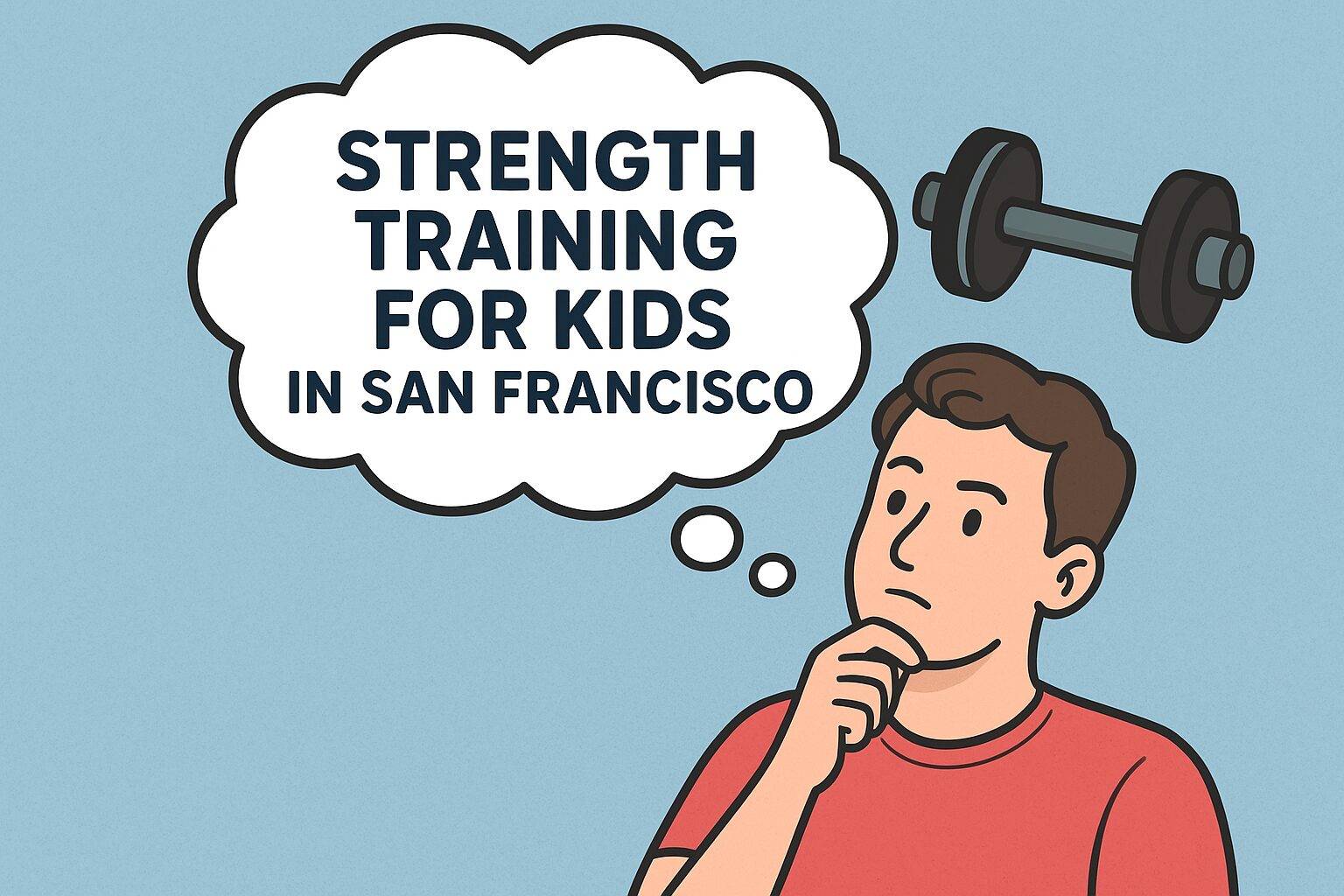
Strength Training for Kids in San Francisco — Safe, Fun & Effective
Strength training for kids that unlocks confidence, athleticism, and injury resistance. In-home & park programs by CoachJunior — book a free consultation today!
Introduction
Thinking about strength training for kids can bring up a lot of questions — “Is it safe?” “When should they start?” “What should they do?” If you’re a parent, coach, or caregiver, you want clear, practical answers — not a pile of confusing jargon. This guide gives you just that: science-informed, coach-friendly, step-by-step guidance you can use today. Whether you live in San Francisco and want a local program or you’re simply building safe workouts at home, this piece covers what counts as resistance training, when to start, what’s effective, and how to keep kids safe and motivated.
What Exactly Is Strength Training for Kids?
Strength training for kids (also called youth resistance training) includes structured exercises that make muscles work against resistance to improve strength, power, coordination, and function. Unlike adult bodybuilding or powerlifting, youth programs focus on movement quality and progressive challenge — think: teaching your child to move well before asking them to move heavy.
Difference between strength training and bodybuilding
Purpose: Strength training for kids focuses on functional strength, bone health, motor skills, and sports performance. Bodybuilding focuses on muscle size and aesthetics.
Intensity & volume: Kids’ programs use lower loads, fewer sets, and higher emphasis on technique. Bodybuilding often uses higher volumes and heavier loads
Long-term approach: Strength training builds athleticism and protects developing bodies. Bodybuilding practices (heavy isolations, extreme dieting) are inappropriate for most children and adolescents.
What counts as resistance training for children?
Resistance training for kids isn’t just dumbbells. It includes:
Bodyweight exercises (squats, lunges, push-ups, planks)
Resistance bands and tubing
Medicine balls and partner throws
Light free weights (age-appropriate dumbbells)
Functional equipment (TRX, kettlebells only at very light loads and with expert supervision)
Playful resistance (partner pushes, sled drags, hill sprints done safely)
If it makes muscles work harder than normal movement and is progressed logically, it’s resistance training.

Can Kids Start Strength Training?
Short answer: Yes — with the right structure, supervision, and progressions. The key is readiness and responsible coaching.
Kids can build strength, improve bone health, and reduce injury risk when programs prioritize form, gradual progression, and playfulness.
We treat improvement like a learning curve — teach mechanics first, load later. Think of strength training as giving kids a toolbox of movement skills, not a prescription to lift heavy.
Debunking myths about growth stunting
One of the most persistent myths is that lifting weights will stunt a child’s growth. This is not supported by the evidence when training is supervised and age-appropriate. Problems arise not from the idea of training itself but from unsupervised lifting, poor technique, or attempts at maximal lifting without proper progression. In short: supervised, correctly dosed strength training does not stunt growth — it helps bone development and physical literacy.
Expert opinions and research findings
Health and pediatric experts increasingly support youth resistance training when it’s supervised and well designed. The practical takeaways from the research and consensus statements are:
Strength training can be safe and beneficial for children and adolescents.
Injury rates are low in supervised youth strength programs.
Benefits include improved strength, motor skills, body composition, and injury prevention.
(As always: consult a pediatrician if your child has medical conditions or recent injuries.)
At What Age Should Kids Start Strength Training?
There’s no universal birthday for starting. Start with readiness and movement competency, not an arbitrary age.
Signs of readiness over strict age limits
Instead of asking “How old?” ask:
Can the child follow instructions and focus for short bursts?
Can they perform basic patterns (squat, hinge, push, pull) with control?
Do they understand and follow safety cues?
If yes, they’re likely ready for structured, simple strength sessions.
Typical age ranges recommended by experts
Ages 5–8: Emphasize play, balance, coordination, and bodyweight games. Strength development is casual and fun.
Ages 8–11: Introduce structured bodyweight circuits, dynamic movements, and light resistances like band work.
Ages 12–16: Increase structure and progression: light dumbbells, increase sets/reps, and sport-specific strength work for motivated teens.
Emotional maturity and ability to follow instructions
Emotional maturity matters as much as physical readiness. A child who is easily distracted or unable to follow simple safety instructions should remain in play-based movement until they can focus reliably. Effective youth coaches look for attention span, compliance, and ability to follow multi-step directions before progressing.
Benefits of Strength Training for Kids
Strength training isn’t just about muscles — it’s a long-term investment in health, performance, and confidence.
Physical benefits — stronger muscles, bones, and joints
Muscle strength: Better ability to perform daily tasks and sport skills.
Bone health: Resistance loading during growth stimulates bone density gains.
Joint stability: Strengthens tendons and ligaments, reducing risk of common injuries.
Sports performance and injury prevention
Stronger, more coordinated kids move better — faster accelerations, more powerful jumps, cleaner changes of direction. Proper strength training improves athletic performance and decreases incidence of overuse injuries by improving movement patterns and muscle balance.
Mental benefits — confidence, discipline, and focus
Nailing a new movement or increasing reps gives kids a real sense of accomplishment. That builds confidence, discipline, and the focus needed both on and off the field.
Long-term health habits and obesity prevention
Early positive experiences with strength training help form lifelong exercise habits. Strength training aids body composition, can complement cardio, and helps prevent childhood obesity when paired with good nutrition and active lifestyles.
Best Strength Training for Kids (Safe & Effective Options)
The most effective programs mix simplicity with variety and fun.
Bodyweight exercises kids can do anywhere
Bodyweight is the foundation:
Air squats — teach hip-hinge and ankle mobility.
Lunges / step-ups — single-leg strength and balance.
Push-ups (incline or knee) — pressing pattern and core stability.
Plank / dead bug — core control.
Glute bridge — posterior chain activation.
These can be done in a park or at home — perfect for San Francisco families who prefer outdoor sessions.
Resistance bands and light free weights
Resistance bands are safe, portable, and highly scalable. Light dumbbells or kettlebells can be added for older kids (with coaching). Use bands to teach rowing and pressing patterns before introducing free weights.
Medicine balls and functional training
Medicine ball throws, slams, and rotational tosses teach power and coordination. Functional training — sled pushes, carries, and partner games — builds transferable strength.
Fun, play-based strength activities
Turn strength into a game — obstacle courses, relay strength challenges, timed circuits, and partner tosses. Play keeps kids engaged and reduces fear of “the gym.”

Safety Guidelines Every Parent Should Know
Safety begins with good design and ends with common sense.
Importance of supervision and qualified coaches
Children should always train under qualified supervision. Coaches experienced in youth development prioritize instruction, technique, and progressive overload. Look for coaches who can explain movement simply and safely.
Proper warm-up and cool-down routines
Warm-up (5–10 min): light cardio, mobility drills, dynamic stretches.
Activation (2–5 min): glute bridges, band pulls, scapular activation.
Cool-down: gentle stretching and breathing to reduce soreness.
Reps, sets, and progression for kids
Beginners: 1–2 sets per exercise, 8–15 reps.
Progression: increase reps → add sets → add light resistance (5–10% increases).
Train 2–3 nonconsecutive days per week. Rest and recovery matter.
Avoiding common mistakes (like max lifts too early)
No 1-rep max testing for children.
Avoid explosive maximal lifts until technique and maturation are solid.
Don’t let kids chase heavy weights to impress peers — value control over load.
Sample Strength Training Program for Kids
Below are practical, age-tailored workouts you can use immediately. Each session should be supervised and kept fun.
Example beginner workout (ages 7–10)
Frequency: 2 sessions/week
Structure: Warm-up → 6 exercises → fun finisher → cool-down
Warm-up (7 min): Jog 2 min, leg swings, arm circles, bear crawls.
Main (20 min):
Air squats — 1–2 sets × 8–12 reps
Walking lunges — 1–2 sets × 8 reps each leg
Incline push-ups — 1–2 sets × 6–10 reps
Band rows/assisted inverted rows — 1–2 sets × 8–12 reps
Plank — 2 × 20–30 seconds
Medicine ball chest pass (partner) — 8–10 reps
Fun finisher: Short relay or obstacle course
Cool-down: Light stretching, 3 minutes
Example intermediate workout (ages 11–14)
Frequency: 2–3 sessions/week
Structure: Warm-up → activation → strength circuit → cooldown
Warm-up (8 min): Light jog & dynamic mobility
Main (30 min):
Goblet squat (light dumbbell) — 2 sets × 10–12 reps
Romanian deadlift (body weight → light load) — 2 sets × 8–10 reps
Push-ups → progression to full — 2 sets × 8–12 reps
Band/DB rows — 2 sets × 8–12 reps
Single-leg balance + reach — 2 sets × 6–8 each leg
Farmer carry (light) — 2 × 20–30 seconds
Cooldown: Mobility + foam rolling if available
Note: Advanced programming can include heavier loads, but only with solid technique and experienced coaching.

Strength Training for Kids in San Francisco
If you live in San Francisco, you’re in a great spot for outdoor, coach-led youth training. Parks, beaches, and community centers provide safe, open spaces for body weight and band programs — no fancy gym required.
Local opportunities for youth fitness
Outdoor boot camps, youth classes at local parks, and small group programs are common in the Bay Area. Look for sessions that emphasize small groups, coach qualifications, and structured progressions.
Community recreation centers and school-based after school programs often include youth strength and movement sessions.
How Coach Junior supports kids’ development in the Bay Area
At Coach Junior, we blend evidence-based progressions with a playful coaching style that kids love. Our approach:
Short, focused sessions that keep attention high.
Movement assessments to identify strengths/gaps.
Personalized plans for sports, general fitness, or rehab.
Outdoor and small-group options across San Francisco — perfect for families who prefer fresh air and functional movement.
Want to try a session? We offer movement assessments and trial classes so you can see how your child responds before committing.
Common Myths About Kids and Strength Training
It’s time to bust the big ones so you can make decisions confidently.
“It stunts growth” — fact or fiction?
Fiction. Properly supervised strength training does not stunt growth; it supports bone density and muscular development. The risk comes from poor supervision and inappropriate heavy lifting, not from resistance training itself.
“Kids should only do cardio until high school”
Not true. Strength and cardiorespiratory work complement each other. Early strength work develops motor control and reduces injury risk, which actually helps kids enjoy sports longer.
“Strength training is dangerous for young athletes”
Only if it’s unsupervised or poorly designed. With qualified coaching, age-appropriate progressions, and a focus on technique, youth strength training is safe and beneficial.
How to Keep Kids Motivated and Engaged?
Motivation is the secret ingredient — and it’s often more important than the program itself.
Making workouts fun and interactive
Games, partner drills, and obstacle courses turn strength into play. Kids are more likely to stick with routines if they enjoy them.
Goal-setting and celebrating progress
Set small, measurable goals (e.g., “Hold plank 10 extra seconds” or “Complete 10 continuous squats with good form”) and celebrate wins. Visual charts and stickers work wonders for younger kids.
Building lifelong healthy habits
Make training a positive part of family life. Model active behavior, encourage outdoor play, and emphasize movement quality over numbers on a dumbbell.
Why Choose Coach Junior for Youth Strength Training in San Francisco?
If you’re deciding who to trust with your child’s physical development, Coach Junior offers a kid-first approach with local know-how.
Our philosophy and safe coaching approach
We teach movement, not just exercises. Every plan starts with a movement assessment, focuses on technique, and is scaled to the child’s emotional and physical maturity.
Real success stories from local families
San Francisco families tell us their kids gained confidence, injury resilience, and better sports performance in a few months. (We can add short anonymized testimonials to your landing page to boost trust.)
Getting started with a free consultation
Try a free movement assessment or book a trial session. We’ll evaluate movement patterns, set goals, and propose a short plan you can trial before committing.
Conclusion
Strength training for kids is safe, effective, and enjoyable when it’s done the right way. It builds more than muscle — it builds movement skill, confidence, and lifelong habits. Whether you’re in San Francisco looking for outdoor coaching or at home building body weight routines, start with movement quality, keep it fun, and scale responsibly. Coach Junior is here to help families in the Bay Area make strength training a positive, empowering experience.
FAQ’s
Is strength training safe for kids?
Yes, strength training for kids is safe when supervised by qualified coaches, focused on proper form, and age-appropriate exercises. It improves strength, coordination, and confidence while reducing injury risk in sports. Safety, fun, and gradual progression are key.
How much weight can my child use?
Kids should start with body weight exercises or very light resistance like bands or 1–5 lb weights. The goal isn’t heavy lifting but learning correct form, control, and confidence. Proper supervision ensures safe progression as children grow stronger and more coordinated.
How often should they train?
Strength training for kids is effective with 2–3 sessions per week on non-consecutive days. Each session can last 20–45 minutes, focusing on fun, varied, safe exercises. Consistency matters more than intensity, helping kids build strength, coordination, and lifelong healthy habits.
Will it stunt growth?
No, research confirms strength training for kids does not stunt growth when done correctly. In fact, it supports bone health and overall development. Growth issues only arise from unsafe practices, like heavy max lifts without supervision. Safety ensures healthy growth.
Do they need a gym or special equipment?
Not at all! Kids can build strength using body weight moves like push-ups, squats, and planks at home or outdoors. Resistance bands, light dumbbells, or medicine balls can help, but fun, play-based exercises are just as effective for kids.