
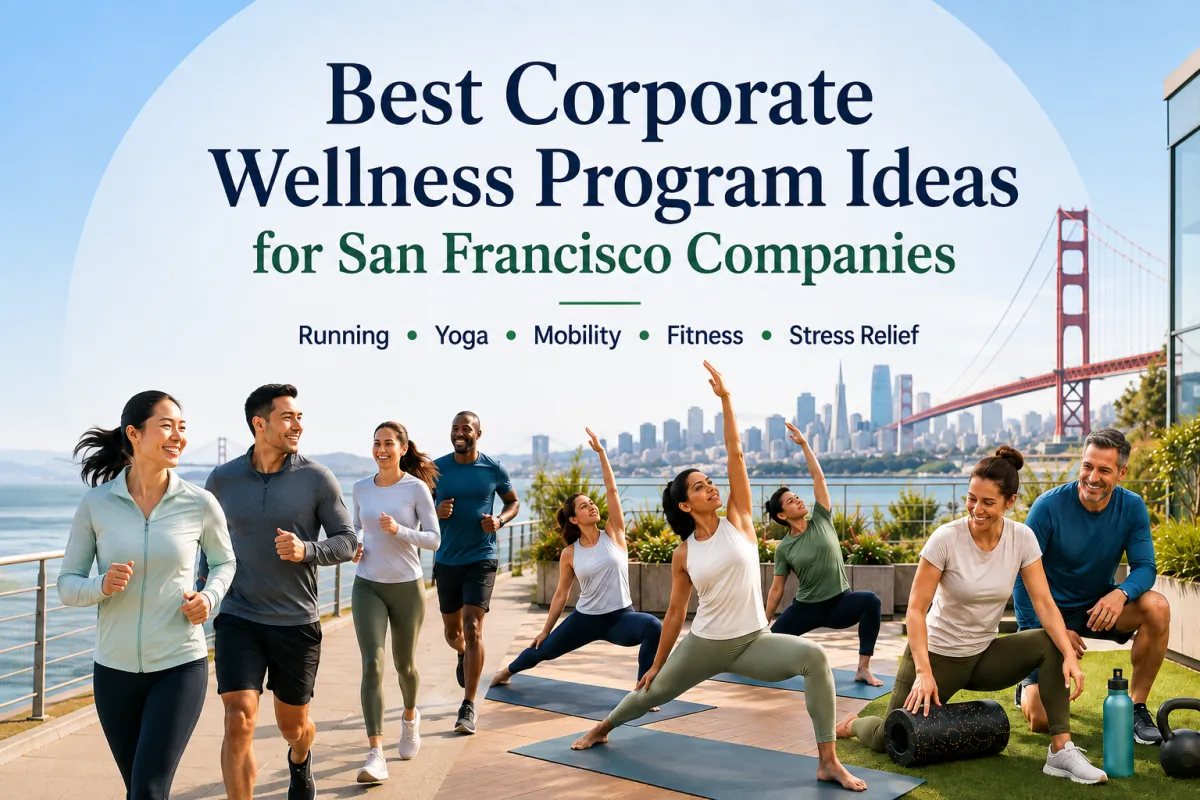
Best Corporate Wellness Program Ideas for San Francisco Companies
San Francisco companies operate in a fast-paced environment where employees often balance demanding schedules, long hours at a desk, hybrid work, meetings, and performance expectations. As a result, more businesses are looking for practical ways to support employee health, movement, stress management, and team connection.
A well-designed corporate wellness in San Francisco strategy can help companies create healthier routines without making wellness feel like another workplace obligation.
The best corporate wellness programs are accessible, flexible, and enjoyable enough that employees actually want to participate. From running clubs and yoga sessions to mobility training, meditation, fitness challenges, and wellness workshops, companies have many ways to build a program around the needs of their teams.
Below are some practical corporate wellness program ideas San Francisco businesses can consider.
Why Corporate Wellness Matters for San Francisco Companies
Modern employees may spend much of their day working at a computer, attending virtual meetings, managing deadlines, and sitting for extended periods.
A thoughtfully planned corporate employee wellness program gives employees structured opportunities to move, recover, interact with coworkers, and develop healthier routines during or around the workday.
Effective corporate wellness initiatives can encourage:
Regular physical activity
Improved mobility and movement habits
Stress management
Team connection
Employee engagement
Healthier workplace routines
Opportunities to step away from screens
For businesses exploring corporate wellness in the Bay Area, the goal should not simply be to add another employee benefit. The focus should be on creating activities that fit naturally into employees' schedules and workplace culture.
Corporate Running Groups
Corporate running clubs can be an excellent wellness option for companies in San Francisco.

Instead of employees exercising individually, a company running group turns physical activity into a shared experience. Sessions can be structured for different fitness levels so beginners and experienced runners can participate comfortably.
A coached corporate running session may include:
Dynamic warm-ups
Mobility exercises
Running technique
Beginner run/walk options
Pace-based groups
Interval training
Endurance sessions
Cool-down exercises
Programs can be scheduled before work, during lunch, or after the workday.
The key is inclusivity. A successful running program should not be designed only for competitive runners. Employees who are new to running should also have an accessible entry point.
For companies developing company wellness programs, a recurring running club can provide both physical activity and social interaction.
Outdoor Corporate Yoga
Employees who spend hours sitting at desks may experience stiffness, reduced mobility, and physical fatigue.

Corporate yoga provides an approachable way to incorporate movement, flexibility, breathing, and recovery into the workplace wellness experience.
Sessions can focus on:
Hip mobility
Shoulder mobility
Spine movement
Balance
Core strength
Posture
Breathing
Relaxation
San Francisco also provides opportunities to move some wellness sessions outdoors when appropriate.
A 30- to 60-minute class can work before the workday, during lunch, or in the afternoon.
Yoga can also be adapted for hybrid workplaces by combining in-person sessions with virtual participation.
Desk Mobility and Posture Sessions
Not every corporate wellness program needs to involve an intense workout.

Short mobility sessions can be one of the most practical options for employees who spend long periods working at a computer.
A workplace mobility session may include exercises focused on the:
Neck
Shoulders
Upper back
Lower back
Wrists
Hips
Ankles
Employees can also learn simple movements they can perform independently throughout the day.
Desk mobility programs have a relatively low barrier to participation because employees generally do not need specialized equipment, advanced fitness experience, or a full change of clothes.
For businesses beginning their first corporate employee wellness program, mobility sessions can be a simple and accessible starting point.
Lunch Break Fitness Sessions
One of the biggest challenges employees face is finding time to exercise.

Lunch break fitness programs can reduce that barrier by bringing structured activity directly to the workplace.
Sessions may include:
Bodyweight strength exercises
Resistance training
Functional movement
Core exercises
Low-impact cardio
Mobility circuits
Stretching
A 30- to 45-minute workout can provide employees with meaningful activity while still fitting into the workday.
Programs should include modifications for different fitness levels to make participation more comfortable and inclusive.
A professional corporate wellness provider in San Francisco can also adapt session formats according to available office space, group size, fitness levels, and scheduling requirements.
Corporate Fitness Challenges
Friendly challenges can make corporate wellness more engaging.
Companies can organize challenges based on:
Daily steps
Weekly workouts
Running distance
Active minutes
Mobility sessions
Team activity goals
Consistency streaks
For example, a company could organize a 30-day movement challenge where employees earn points for completing different activities.
However, the purpose should not be to determine who is the fittest employee.
A better approach is to reward consistency, participation, and teamwork.
Team-based wellness challenges can encourage coworkers to motivate each other and create a stronger sense of participation across departments.
Stress Management and Recovery Programs
Not every employee needs more high-intensity activity.
In some workplaces, recovery-focused sessions may be equally valuable.
Companies can introduce programs involving:
Guided breathing
Gentle stretching
Mobility
Meditation
Yoga-based recovery
Relaxation exercises
Short sessions can be scheduled between meetings, during lunch breaks, or toward the end of demanding workdays.
A balanced approach to corporate wellness should recognize that exercise, mobility, recovery, and stress management can all play different roles in employee wellbeing.
Stress Management and Recovery Programs
Not every employee needs more high-intensity activity.
In some workplaces, recovery-focused sessions may be equally valuable.
Companies can introduce programs involving:
Guided breathing
Gentle stretching
Mobility
Meditation
Yoga-based recovery
Relaxation exercises
Short sessions can be scheduled between meetings, during lunch breaks, or toward the end of demanding workdays.
A balanced approach to corporate wellness should recognize that exercise, mobility, recovery, and stress management can all play different roles in employee wellbeing.
Outdoor Team Wellness Activities
One advantage of offering corporate wellness in the Bay Area is the availability of outdoor environments suitable for team activities.

Companies may consider organized activities such as:
Group runs
Run/walk sessions
Outdoor yoga
Walking groups
Mobility sessions
Team fitness workouts
Depending on logistics and accessibility, areas such as the Embarcadero, Marina Green, Crissy Field, Golden Gate Park, and the Presidio can potentially support different outdoor wellness activities.
Outdoor sessions can also combine physical wellness with social interaction, making them useful for company wellness days and recurring employee programs.
Hybrid Corporate Wellness Programs
Many San Francisco companies now operate with a combination of office-based and remote employees.
A workplace wellness strategy designed exclusively for people in the office may exclude a significant portion of the team.
Hybrid corporate wellness programs can combine:
On-site fitness sessions
Outdoor group activities
Virtual workouts
Online wellness challenges
Remote mobility sessions
Virtual yoga
Digital accountability activities
For example, employees based in the San Francisco office could participate in an in-person session while remote employees join a virtual wellness activity.
This allows businesses to build more inclusive company wellness programs without restricting participation to one location.
Offer Different Wellness Options
One of the most common mistakes companies can make is assuming every employee enjoys the same type of activity.
Some people enjoy running. Others prefer yoga or strength training. Some employees may be more comfortable with mobility, walking, stretching, or meditation.
A more inclusive weekly wellness schedule could look like:
Monday
Workplace mobility session
Wednesday
Corporate running club
Friday
Yoga and breathwork
Monthly
Wellness workshop or team fitness challenge
Providing different options allows employees to choose activities that better suit their interests and fitness levels.
Make Wellness Programs Easy to Join
The success of a corporate wellness initiative often depends on accessibility.
Even a well-designed program may struggle to gain participation if employees find it inconvenient.
Companies should consider:
Holding activities at or near the workplace
Providing beginner-friendly sessions
Keeping registration simple
Offering multiple fitness levels
Scheduling around actual work hours
Clearly communicating upcoming sessions
Gathering employee feedback
Keeping participation voluntary
Adjusting programs based on attendance
Before launching a large program, companies can also begin with a pilot activity and measure participation.
A corporate wellness consultant can help evaluate employee needs and create a program structure suited to the organization's workforce.
How to Choose a Corporate Wellness Provider in San Francisco
The right provider should offer more than a generic fitness class.
Before choosing a corporate wellness provider in San Francisco, businesses should consider several factors.
Program Flexibility
Can sessions be adapted for beginners and more experienced participants?
Location Options
Can programs be delivered at the workplace, outdoors, virtually, or through hybrid formats?
Scheduling
Can sessions take place before work, during lunch, or after work?
Variety
Does the provider offer different activities such as running, fitness, yoga, mobility, meditation, and workshops?
Customization
Can the program be adjusted according to employee needs, company size, participation levels, and workplace culture?
A customized approach usually provides more value than forcing every company into the same program structure.
How to Build a Corporate Employee Wellness Program
Companies do not need to launch a large wellness initiative immediately.
Start by asking a few questions.
What does our team need most?
Determine whether employees are primarily interested in fitness, mobility, stress management, social connection, or a combination.
Who is likely to participate?
Consider fitness levels, work arrangements, accessibility requirements, and employee interests.
When can employees realistically join?
For some companies, lunchtime works best. Others may see better participation before or after work.
Are employees working remotely?
If so, include virtual or hybrid options.
How will success be measured?
Track participation, repeat attendance, and employee feedback.
A pilot program can help identify which activities employees enjoy before the company commits to a longer schedule.
Corporate Wellness Programs Should Fit Your Company
There is no single wellness program that works for every business.
A technology company with a hybrid workforce may require a very different structure from a smaller office-based organization.
The most effective corporate health wellness programs are built around the actual needs of employees.
Companies can combine:
Corporate running groups
Yoga
Meditation
Group fitness
Mobility sessions
Employee challenges
Wellness workshops
Outdoor activities
Virtual programs
This flexible approach allows companies to gradually develop a stronger workplace wellness culture.
Build a Corporate Wellness Program Your Employees Will Actually Use
Corporate wellness does not have to mean creating an expensive company gym or introducing a complicated corporate wellness platform.
For many organizations, a more practical solution is to provide employees with accessible opportunities to move, recover, and interact with coworkers.
Running groups, yoga sessions, mobility training, group fitness, meditation, wellness workshops, and team challenges can all become part of an effective workplace wellness strategy.
For businesses looking for corporate wellness in San Francisco, Coach Junior provides customizable workplace wellness options including corporate running programs, yoga, meditation, mobility, fitness sessions, wellness workshops, and team challenges.
Programs can be structured around your company's schedule, employee fitness levels, workplace environment, and wellness goals.
Whether you are creating a new program or improving an existing one, working with an experienced corporate wellness provider in San Francisco can help you build an employee wellness program that is practical, inclusive, and easier for your team to participate in.
Frequently Asked Questions
What are the best corporate wellness programs for San Francisco companies?
Popular options include corporate running groups, yoga, group fitness sessions, mobility training, meditation, wellness workshops, employee fitness challenges, and hybrid wellness programs.
What does a corporate wellness consultant do?
A corporate wellness consultant helps companies identify employee wellness needs and develop activities or programs around fitness, movement, stress management, engagement, and workplace schedules.
Can small companies offer corporate employee wellness programs?
Yes. Small businesses can start with one weekly activity such as yoga, mobility, group fitness, or a running club and expand the program based on employee interest.
Can corporate wellness programs work for hybrid teams?
Yes. Hybrid programs can combine on-site activities with virtual fitness, yoga, wellness challenges, mobility sessions, and other remote participation options.
How do I choose a corporate wellness provider in San Francisco?
Look for a provider that offers flexible scheduling, multiple wellness activities, beginner-friendly options, on-site and outdoor sessions, hybrid services, and programs customized around your employees.
How often should companies organize wellness activities?
There is no universal schedule. Many companies can begin with one weekly activity and adjust the frequency based on employee attendance, feedback, and wellness goals.